Enterprise sales cycles don’t slow down in Q4 — they compress. Budgets are closing, procurement teams are moving faster than usual, and decision-makers are trying to get contracts signed before the calendar resets. For sales leaders, that combination of urgency and finality makes Q4 the highest-leverage window of the year to bring a stalled deal home.
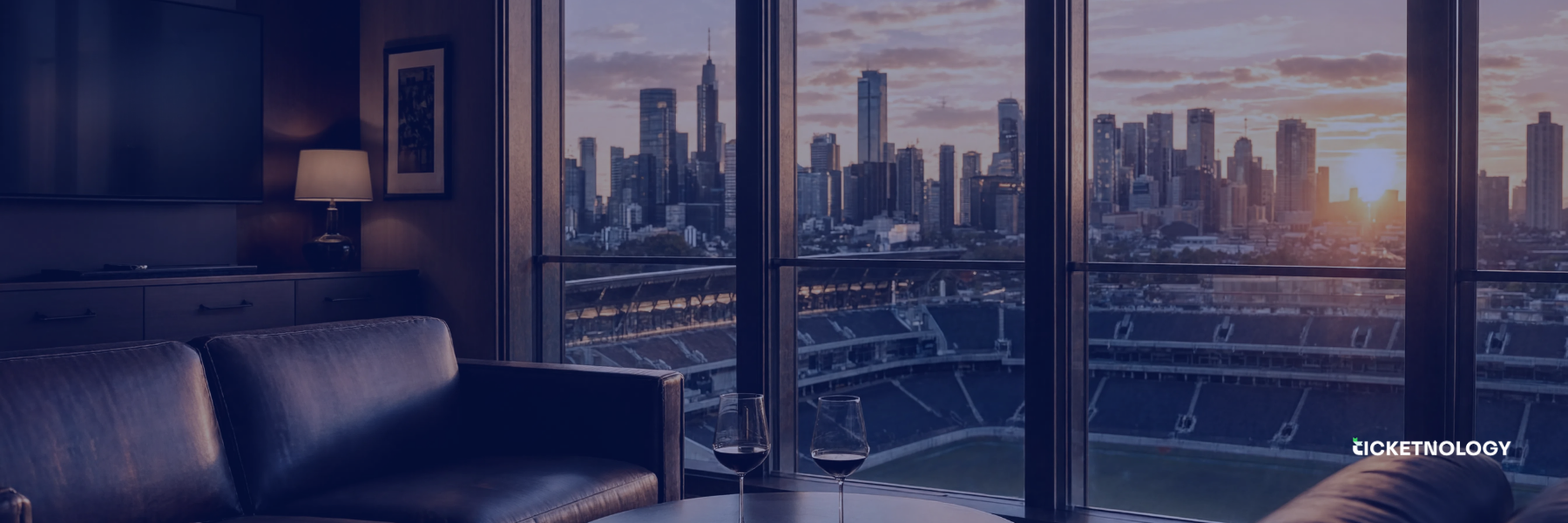
It’s also, not coincidentally, peak season for live events. NFL, NHL, and NBA calendars overlap, playoff races heat up, and the fall corporate hospitality circuit is in full swing. Sales teams who treat that overlap as a coincidence are leaving deals on the table. The ones who treat it as a strategy are closing them.
Enterprise buyers behave differently in the final quarter than they do in Q1 or Q2. Three shifts matter most for sales teams:
That last point is where live events outperform almost every other sales tool available. A traditional deck or a follow-up call reinforces information the buyer already has. A well-run suite night, a courtside seat, or a private hospitality experience does something a deck can’t: it builds the kind of trust that moves a “yes, but” into a signed contract.
The strongest sales leaders don’t use tickets as a reward for closing a deal — they use them as a lever to close it. A late-quarter hospitality event gives a rep uninterrupted, informal time with the exact stakeholders who influence the final decision: the economic buyer, the champion, sometimes even the person who’s been quietly stalling procurement.
That time is difficult to manufacture any other way. No calendar invite titled “final contract review” gets the same candor as three hours in a suite during a tight fourth quarter. And because the relationship-building happens in a low-pressure setting, buyers tend to move faster afterward — not because they were pitched again, but because the deal now feels personal instead of transactional.
The problem isn’t a lack of belief in hospitality as a sales tool. It’s execution. Q4 is exactly when internal ticket programs tend to break down the most:
This is the gap Ticketnology was built to close. Ticket Booth gives sales and marketing teams a single, real-time view of ticket inventory across every account and event, so a rep chasing a Q4 close can see availability and request tickets in minutes — not days. When a deal is moving fast, that speed is often the difference between using the event as leverage and missing the window entirely.
Budget visibility matters just as much as inventory visibility. Ticket Pass gives sales leaders a clear, real-time read on hospitality spend by account, rep, or deal — so hospitality investment can be tracked against pipeline the same way any other sales expense would be, and justified with data at year-end instead of guesswork.
And for the tickets that don’t get used — a canceled meeting, a prospect who pushes to Q1 — Ticket Consignment recovers that value instead of letting it disappear. In a quarter where every dollar of budget is under scrutiny, unused inventory shouldn’t be a write-off.
Sales leaders who get the most out of Q4 hospitality tend to follow the same pattern:
None of this requires a bigger hospitality budget. It requires better visibility into the one already in place.
Q4 rewards sales teams that move fast and build trust efficiently — and live events remain one of the most effective ways to do both. The companies winning enterprise deals this quarter aren’t necessarily spending more on hospitality. They’re spending it with more precision, backed by real visibility into inventory, budget, and outcomes.
If your ticket program isn’t built to move at the speed enterprise sales requires, Q4 will expose that gap fast.
Ready to see how Ticketnology can support your Q4 pipeline? Book a demo and see how leading sales teams are using live events to close faster.
Looking for more information or want to schedule a free demo? Let’s chat!
By submitting this form you agree to be contacted and receive additional communication, including emails from Ticketnology.