For companies using tickets as a strategic asset—whether for client entertainment, sales acceleration, or employee incentives—managing inventory is no longer just about logistics. It’s about efficiency, visibility, and ROI.
Yet many organizations still struggle with fragmented systems, lack of control across offices, and limited insight into how tickets are actually being used.
That’s changing.
With the introduction of AI-powered workflows, multi-office segmentation, and smarter contact data, ticket management is evolving into a true business intelligence system.
Here’s how.
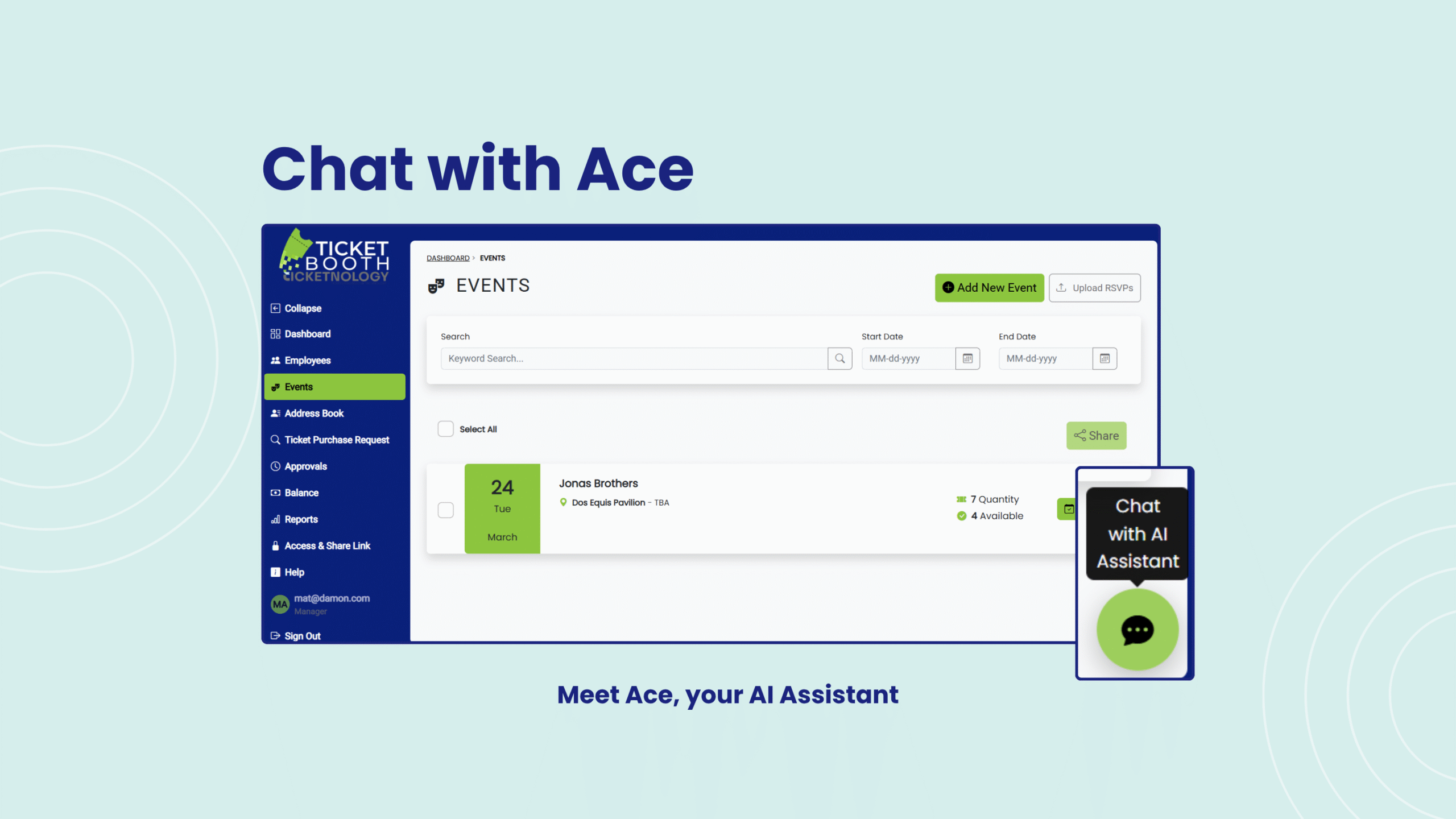
Most platforms require users to navigate multiple menus just to complete a simple task. That friction adds up—especially at scale.
Ace changes that completely.
Instead of searching through the platform, users can simply ask for what they need in a chat interface. Want to allocate tickets for an upcoming concert? Done. Need to check availability for a client? Handled instantly.
But Ace goes beyond reactive support.
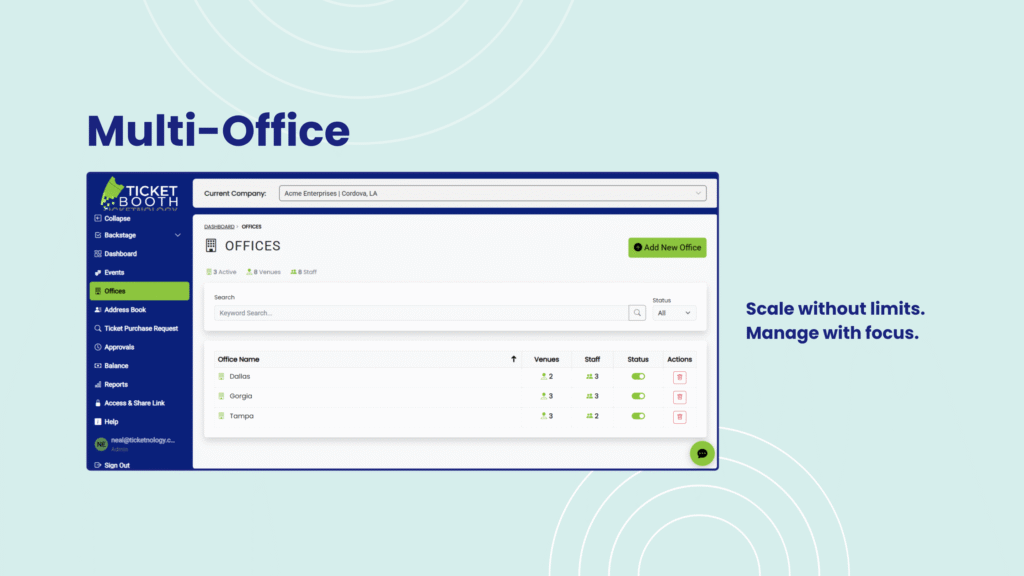
As companies grow, so does the complexity of managing ticket inventory across locations.
Without proper structure, teams end up:
The Multi-Office system solves this by introducing clear segmentation without losing global visibility.
For enterprises managing tickets across multiple cities, this is the difference between organized scale and operational chaos.
Ticketing isn’t just about inventory—it’s about relationships.
And in many organizations, those relationships are sensitive.
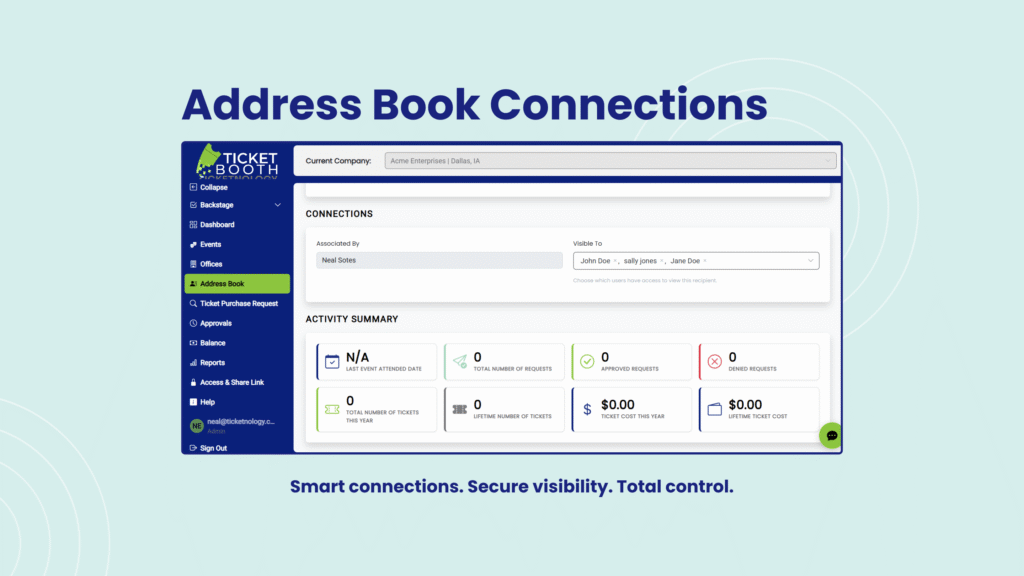
Sales teams want control over their clients. Leadership wants visibility into performance. Traditionally, balancing both has been difficult.
Address Book Connections solves this.
Individually, these features are powerful.
Together, they represent a shift:
This is how companies move from simply managing tickets to leveraging them as a strategic business tool.
The reality is simple:
Managing tickets at scale without the right system leads to inefficiencies, lost revenue, and missed opportunities.
What these innovations deliver is clarity, control, and measurable impact.
For companies investing heavily in tickets as part of their marketing, sales, or employee engagement strategies, this isn’t just an upgrade—it’s a competitive advantage.
If you’re still managing tickets manually or across disconnected systems, you’re leaving value on the table.
See how Ticketnology can transform your operations with AI, automation, and full visibility.
👉 Book a Demo today and discover what smarter ticket management looks like.
Looking for more information or want to schedule a free demo? Let’s chat!
By submitting this form you agree to be contacted and receive additional communication, including emails from Ticketnology.