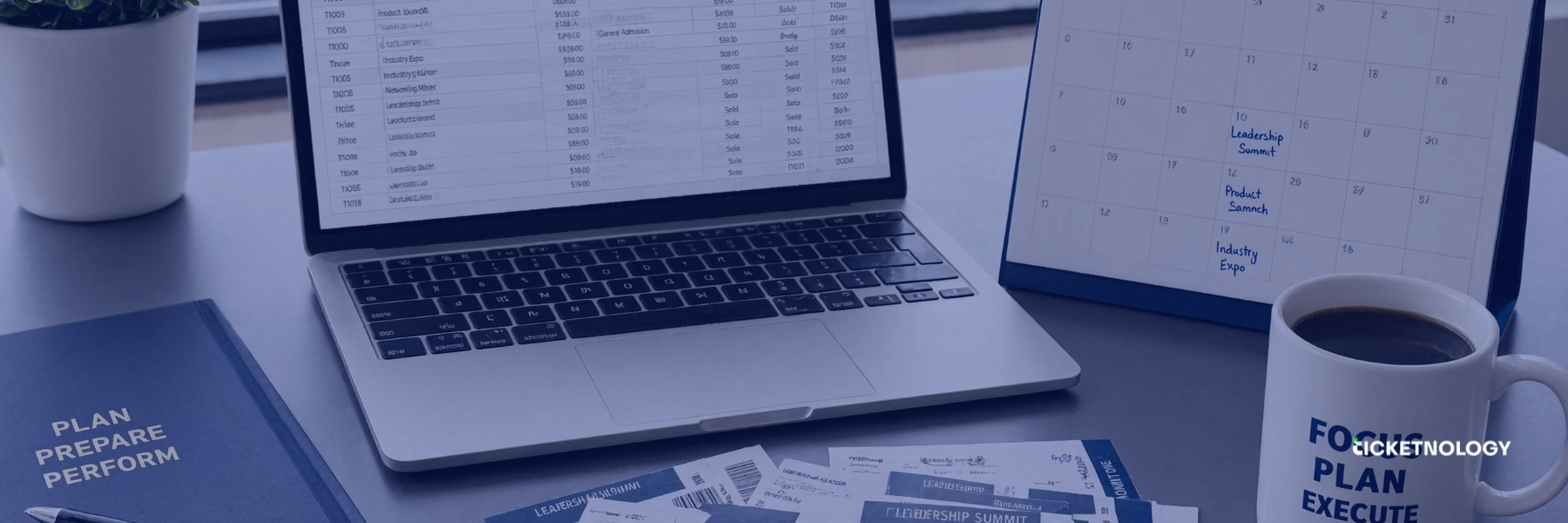
Every company with a season ticket package or a corporate suite thinks of it as a perk. Few think of it as a job.
But somewhere in your organization, someone is spending real hours every week chasing down who wants tickets, who used them, who no-showed, and who forgot to say thank you. That work rarely shows up on an org chart. It shows up in inboxes, spreadsheets, and Slack threads instead.
In most organizations, ticket management isn’t a role. It’s a responsibility someone absorbed — usually in marketing, sales operations, or an executive assistant’s inbox.
That person is doing all of the following, usually with no dedicated system:
None of this is complicated on its own. But multiply it across a dozen events a month, three departments, and an unpredictable request volume, and it becomes a part-time job hiding inside someone’s full-time role.
The hidden cost of manual ticket management doesn’t show up in a budget line. It shows up in three places:
1. Slow response times. A sales rep asks for tickets for a client meeting next week. The request sits in an email chain waiting on approval. By the time it’s confirmed, the moment has passed, or the client has made other plans.
2. No visibility into usage. Finance sees the invoice for the season ticket package. What they don’t see is which tickets actually went to clients, which went unused, and which strategic relationship they were meant to support. Without that data, nobody can say whether the investment is working.
3. Inconsistent client experience. When ticket coordination lives in someone’s head or inbox, it’s easy for details to slip — a client isn’t greeted properly, a suite isn’t stocked, a follow-up thank-you never gets sent. Small gaps like these are what turn a hospitality investment into a missed opportunity.
None of these problems are dramatic on their own. Together, they quietly erode the return on what is often a six- or seven-figure annual ticket spend.
Consider a mid-size professional services firm with a suite at three venues, a handful of season ticket packages, and 40 sales reps who all want access for client entertainment.
Without a system, that firm typically sees:
Multiply the hours spent resolving these issues by an admin’s hourly cost, and the “free” perk starts looking like an operational expense with no return.
The organizations that get the most value from their ticket investment share one thing in common: they stopped managing tickets manually and started managing them strategically.
That shift usually comes down to three capabilities.
Instead of email chains and guesswork, requests flow through one system. Sales, marketing, and executives submit ticket requests the same way, approvals happen fast, and nothing falls through the cracks.
This is the core problem Ticket Booth is built to solve — giving teams one place to request, approve, and track tickets instead of five.
Ticket spend often gets treated as a fixed cost instead of a strategic budget. When leadership can see how tickets are allocated against departments, clients, or campaigns in real time, it becomes possible to make smarter decisions about where that spend actually drives value.
That’s the visibility Ticket Pass provides — turning ticket budgeting from a guessing game into a managed line item with real accountability.
Even the best-run programs end up with tickets that go unused — a client cancels, an exec’s schedule changes, a game gets rescheduled. Without a plan, those tickets are simply wasted.
Ticket Consignment gives organizations a way to resell unused tickets instead of letting them expire, recovering value that would otherwise disappear.
Ask these three questions about your current ticket program:
If any of those answers is “I’m not sure,” the workload is already there. It’s just hidden inside someone’s inbox instead of a system built to handle it.
Tickets were never meant to be an administrative burden. They’re a business tool — one meant to build client relationships, reward top performers, and create moments that move deals forward.
The organizations that treat them that way build a process around allocation, visibility, and reporting. The ones that don’t end up with an invisible job, an invisible cost, and no way to prove the investment is working.
If your team is still coordinating tickets through email threads and spreadsheets, it’s worth seeing what a real system looks like.
Book a demo to see how Ticketnology helps organizations turn ticket management from a hidden workload into a measurable business asset.
Looking for more information or want to schedule a free demo? Let’s chat!
By submitting this form you agree to be contacted and receive additional communication, including emails from Ticketnology.