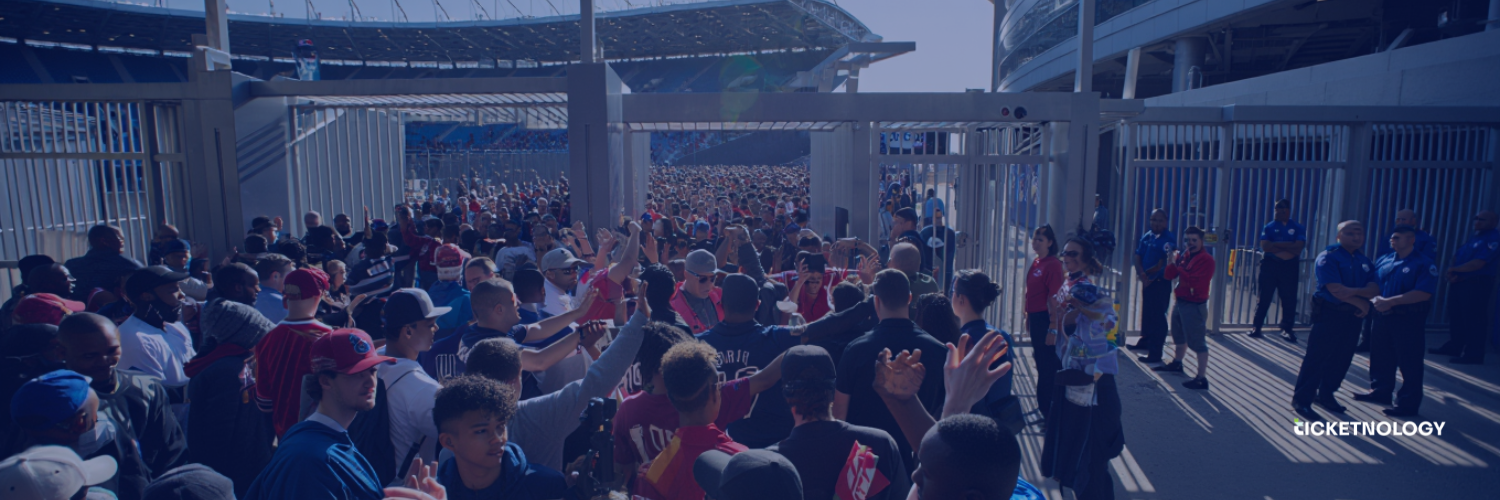
The best event technology rarely announces itself.
When it works, no one points it out. When it fails, everyone notices. That’s the paradox.
For years, event tech—including ticketing—has been designed to be seen: dashboards, workflows, scanners, notifications. More tools, more steps, more “features.”
But the most memorable event experiences don’t feel technical at all. They feel seamless. That’s not accidental. It’s design.
Early ticketing systems were built around control: validate access, prevent fraud, move people through the door. For a long time, that was enough—but expectations have changed.
Today’s attendees don’t want to think about apps, QR codes, or instructions. They expect the experience to simply work—to recognize them, adapt to them, and stay out of the way.
The moment technology becomes noticeable, it’s usually because it’s asking for something:
Open this.
Download that.
Fix this issue.
Stand here.
Wait.
Invisible tech does the opposite. It removes friction instead of adding steps. In ticketing, that shift is subtle—but powerful.
Invisible ticketing doesn’t feel like a transaction. It feels like continuity.
Access that’s already there. Entry that doesn’t interrupt the moment.
The scan isn’t the event—it’s just a quiet transition between anticipation and experience.
What’s interesting is that invisible technology is often more sophisticated behind the scenes, not less.
It relies on better data, better timing, and better system design. But all of that complexity is absorbed by the platform so the attendee never has to think about it.
That’s the real goal: complexity handled upstream, simplicity delivered downstream.
The same principle applies beyond entry. The best systems know when not to intervene.
They don’t overload attendees with messages.
They don’t force constant decisions.
They surface the right options at the right time—or sometimes, none at all.
As ticketing and event technology continue to evolve, the question isn’t how many features can be added. It’s how much friction can be removed.
Because the most advanced event tech doesn’t feel advanced. It feels natural, human—and when it’s done right, almost invisible.
For event producers, invisible technology changes what success looks like.
It’s not just shorter lines or fewer support issues—though those matter. It’s the absence of confusion. Fewer explanations. Less staff time spent troubleshooting and more time focused on the experience itself.
When ticketing works quietly, producers get space back. Space to design, to adapt in real time, and to stay focused on the room instead of the system.
For tech founders, this is the harder challenge.
The work that matters most is often the least visible. It’s building systems that anticipate edge cases, resolve identity cleanly, and make smart decisions without demanding attention. It’s resisting the urge to showcase complexity and instead designing for restraint.
Because in events, the product isn’t the platform.
It’s the moment—and the best technology respects that by getting out of the way.
Want to see what invisible ticketing looks like in practice?
At Ticketnology, we design ticketing systems that remove friction instead of adding it—so events flow naturally and teams stay focused on the experience, not the tools behind it.
Book a demo and see how invisible event tech can change the way your tickets work.
Looking for more information or want to schedule a free demo? Let’s chat!
By submitting this form you agree to be contacted and receive additional communication, including emails from Ticketnology.