Why Tech Companies Take Product Feedback to the Suite
Customer advisory boards exist to get honest product feedback from a company’s most important customers — and tech companies are increasingly finding that feedback is more candid outside a conference room than in one.
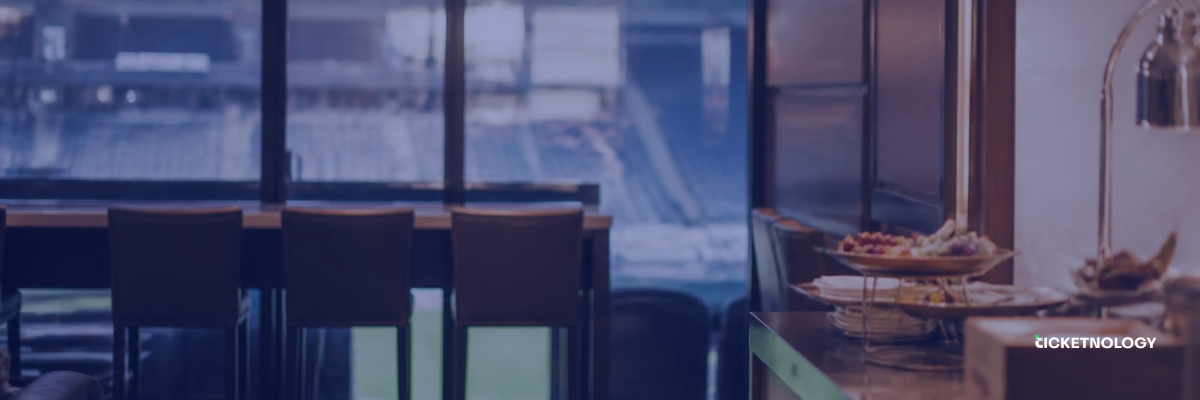
The standard CAB format is familiar: a slide deck, a roadmap review, a round of structured questions, and members who are polite but guarded, especially with competitors or peers from other companies in the room. That format optimizes for an orderly agenda, not for the kind of unscripted conversation that actually surfaces what customers are hesitant to say in a formal setting. Pairing a CAB meeting with a live event — a suite at a game, a concert, or another shared experience — changes the dynamic. People talk differently over several hours in a relaxed setting than they do across a conference table for ninety minutes.
It’s a version of what we mapped out in Same Tickets, Different Playbooks: tech companies get more out of hospitality when they use it for relationship-building moments like this one, not just client entertainment.
Why does the setting change the quality of the feedback?
Formal meetings put customers in “presenting to the vendor” mode. A shared, informal setting puts them in conversation mode instead — with each other as much as with the company hosting them. Product and customer success leaders who run both formats consistently report that the most useful insight of the day often comes from an aside during the event, not from the structured session that preceded it. That’s not a reason to skip the structured agenda; it’s a reason to treat the informal part as a working session too, not just a thank-you dinner tacked onto the end.
What does this actually require to execute well?
More than most companies expect. A CAB-plus-event day means coordinating sales, customer success, and product leadership around the same guest list — often pulling from accounts at very different stages (a renewal-sensitive account next to a newer logo being evaluated for expansion), which calls for some care in seating and pacing. It means tracking who actually attends against who was invited, since CAB attendance itself is a signal worth capturing for account health and renewal conversations later. And it means the hospitality side — catering, seating, timing around the actual event — has to run invisibly in the background so the day reads as “well-run session” and not “logistics problem the product team is quietly managing.”
Where do companies get this wrong?
Usually by treating the event as the reward and the CAB meeting as the “real” work, when the two are meant to function together. If the hospitality logistics are an afterthought — unclear seating, a scramble over catering, no one tracking who showed up — it undercuts the credibility of the whole day, and advisory board members notice when a company that builds sophisticated software can’t run a straightforward event smoothly.
This is where Suite & Hospitality Services earns its place in the mix: full execution of the event side — seating, catering, guest coordination — so product and customer success teams can stay focused on the conversation instead of the logistics. Ticket Booth keeps the guest list, invitations, and attendance record in one place across every team involved, Ticket Pass makes sure the budget for a day like this is set and approved well before the invite goes out, and if an invited account has to drop out at the last minute, Ticket Consignment means that seat doesn’t just go empty.
Is this worth the investment for every tech company, or only at scale?
It scales down more easily than companies assume. A CAB-plus-suite day doesn’t require a stadium-sized guest list — the same principle (informal setting, structured agenda, careful tracking) works with a handful of key accounts in a smaller venue. The return isn’t the event itself; it’s the quality of product feedback and the renewal-stage relationship signal that a well-run day generates, both of which scale with the quality of execution more than the size of the guest list.
Because the informal setting produces more candid feedback. Structured meetings put customers in “presenting to the vendor” mode; a shared experience puts them in conversation mode, which tends to surface things a formal agenda doesn’t.
No — it complements it. The formal session still covers the roadmap and structured questions; the event setting is where the unscripted, often more useful, conversation happens.
Coordinating guest lists across sales, customer success, and product; managing seating and pacing across accounts at different relationship stages; and making sure the event logistics run smoothly enough that they don’t undercut the credibility of the day.
Yes. Who actually shows up — not just who was invited — is a useful signal for account health and renewal conversations, which is easy to lose track of without a shared system.
See how Ticketnology handles the logistics behind a customer advisory board event, from guest list to seating to follow-up. Book a demo.
Looking for more information or want to schedule a free demo? Let’s chat!
By submitting this form you agree to be contacted and receive additional communication, including emails from Ticketnology.