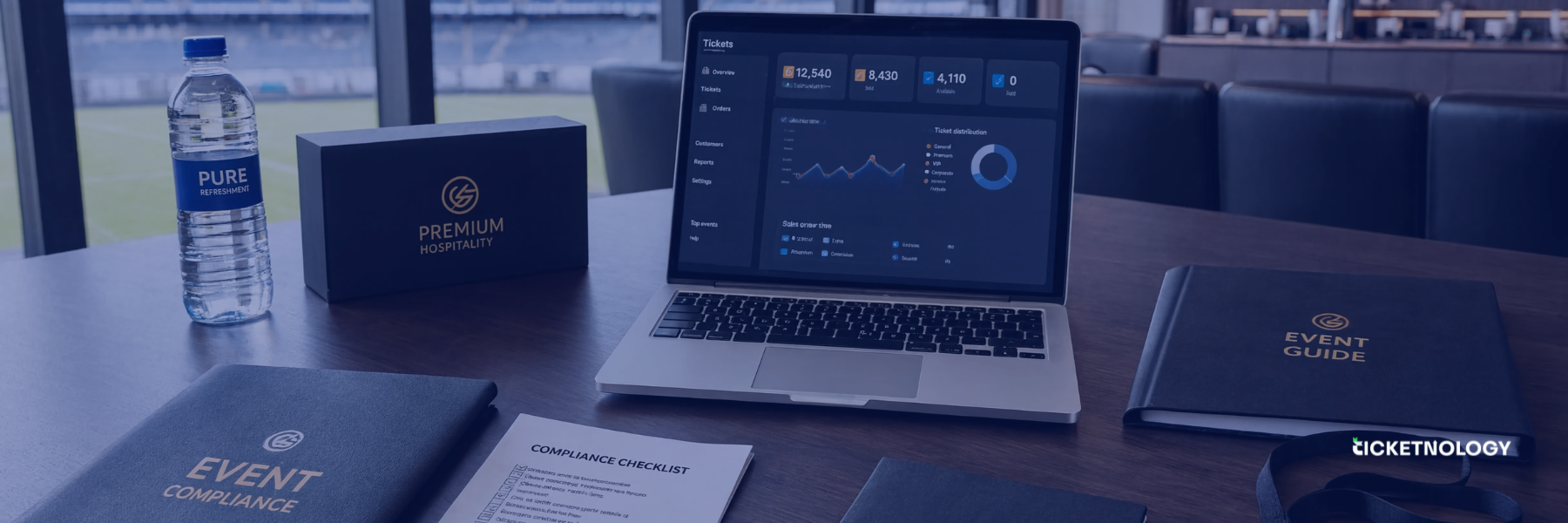
For years, corporate ticket programs were primarily managed by sales, marketing, and hospitality teams. Their focus was straightforward: use tickets to strengthen client relationships, reward employees, and create memorable experiences that support business growth.
Today, however, the landscape is changing.
As companies invest more heavily in corporate hospitality and entertainment programs, legal and compliance teams are becoming increasingly involved in how tickets are acquired, distributed, tracked, and reported. What was once viewed as a relationship-building tool is now also recognized as a potential area of business risk that requires proper governance.
For organizations managing large ticket inventories across multiple departments, compliance is no longer an afterthought. It has become an essential component of a successful ticket strategy.
Several factors are driving increased oversight of corporate ticket management.
Many industries—including financial services, healthcare, technology, and government contracting—operate under strict regulations regarding gifts, entertainment, and business hospitality.
Corporate tickets often fall into these categories.
Organizations must be able to demonstrate:
Without proper documentation, companies may face challenges during audits, internal reviews, or regulatory inquiries.
Board members and executive leadership teams are increasingly focused on accountability and transparency.
Questions that were rarely asked a decade ago are now common:
These questions require data, reporting, and centralized visibility—something many organizations struggle to provide when ticket management relies on spreadsheets and manual processes.
Many organizations still manage tickets through email chains, spreadsheets, and informal approval processes.
While this approach may work for smaller programs, it creates significant challenges as ticket inventories grow.
Common risks include:
Without a centralized system, it can be difficult to verify who received tickets, when they were assigned, and whether proper approvals were obtained.
Different teams may follow different procedures, creating compliance gaps and increasing organizational risk.
When legal or finance teams request documentation, gathering information can become a time-consuming process that requires manual reconciliation from multiple sources.
Unused tickets represent more than lost value—they can create visibility issues that make compliance reviews more difficult.
Legal departments are not trying to limit hospitality programs.
In most cases, their objective is to help organizations continue leveraging tickets effectively while reducing operational and regulatory risk.
The most successful companies recognize that compliance and hospitality are not competing priorities. They are complementary goals.
When organizations implement proper controls, they gain the confidence to scale their ticket programs while maintaining accountability.
This is why many legal teams are now advocating for:
Modern ticket management platforms make it possible to satisfy compliance requirements without creating additional administrative burden.
A centralized solution allows organizations to track every stage of the ticket lifecycle—from acquisition through attendance and reporting.
With a platform like Ticket Booth, companies can gain greater visibility into ticket allocation, monitor utilization, maintain detailed records, and generate reporting that supports both business and compliance objectives.
Rather than relying on disconnected spreadsheets and email threads, teams can manage ticket inventory through a structured, transparent process.
This creates benefits for multiple stakeholders:
An often-overlooked benefit of stronger ticket governance is improved asset utilization.
When companies gain visibility into ticket inventory, they frequently discover opportunities to recover value from unused or underutilized assets.
Organizations can leverage solutions such as Ticket Consignment to monetize unused tickets while maintaining oversight and control.
Similarly, companies looking to strategically acquire premium inventory can benefit from Ticket Fund, which helps organizations access hospitality assets while preserving capital flexibility.
These approaches allow businesses to treat tickets not simply as expenses, but as managed corporate assets with measurable value.
As regulatory expectations continue to evolve, organizations that proactively strengthen their ticket management processes will be better positioned for long-term success.
The goal is not to create more bureaucracy.
The goal is to create a framework where marketing, sales, hospitality, legal, finance, and leadership teams can work from the same source of truth.
Companies that achieve this balance are able to:
Most importantly, they can continue delivering exceptional experiences to clients and employees while maintaining confidence that their programs are aligned with corporate governance standards.
The growing involvement of legal and compliance teams in corporate ticket management reflects a broader shift toward accountability, transparency, and strategic asset management.
Organizations that embrace modern ticket management practices are discovering that compliance is not a barrier to hospitality—it is an enabler of sustainable growth. By implementing centralized processes, maintaining clear audit trails, and leveraging technology-driven solutions, businesses can reduce risk while extracting greater value from every ticket they own.
As ticket inventories become more valuable and scrutiny increases, the companies that succeed will be those that treat ticket management as both a business strategy and a governance priority.
Whether you’re looking to improve compliance, increase visibility, maximize ticket utilization, or better measure ROI, Ticketnology can help.
Explore how Ticket Booth, Ticket Fund, and Consignment work together to create a smarter corporate ticket management strategy.
Book a Demo and see how your organization can gain greater control, transparency, and value from every ticket asset.
Looking for more information or want to schedule a free demo? Let’s chat!
By submitting this form you agree to be contacted and receive additional communication, including emails from Ticketnology.